Innovative Hochschule – Innovation Hub 13
Die beiden Hochschulen TH Wildau und BTU Cottbus-Senftenberg haben sich als überregionale Brücke zwischen Wissenschaft, Wirtschaft und Gesellschaft für das Land Brandenburg zusammengeschlossen.

About Innovation Hub 13
The Innovation Hub is a
- regionally based,
- bottom-up,
- and hub that integrates stakeholders, infrastructure, and expertise
to generate innovations in specific fields of application that are relevant to the region. Innovation Hubs serve as hotspots for regional development and enhance the region’s appeal.
BackgroundOpen areaClose area
Globalization and digitalization, along with the necessary transformation of energy supply and production systems, present social, economic, and political challenges for regions, each with their own specific characteristics. No single scientific discipline, nor any single economic, political, or social actor, can solve these problems through its actions alone. Rather, open and collaborative innovation processes involving interaction among all stakeholders across various sectors of society are necessary. This places high demands on cooperation among the region’s stakeholders, particularly in terms of focusing on open innovation processes and the long-term pooling of innovation resources.
TH Wildau and BTU Cottbus–Senftenberg are assuming their roles in the regional innovation system. They will act as mediators and interpreters of scientific findings for and within the business sector and civil society, thereby involving partners from business, academia, government, and civil society. To this end, the two universities will establish and operate an Innovation Hub. The Innovation Hub integrates and organizes the various innovation stakeholders—including their knowledge, resources, technical infrastructure, methods, and interests—with the combined expertise of the universities forming the core of its activities. The Innovation Hub will create the conditions necessary to develop cross-stakeholder solutions to key societal challenges in the project region.
As part of their active role in the Innovation Hub, the two universities will break down communication barriers between representatives of different interest groups. Bringing together all societal stakeholders in the region thus enables the participatory shaping of the region’s socioeconomic and technological development. Traditional internal university structures are broken down, and core competencies from both universities are pooled and further developed across institutional boundaries. Transfer processes can be carried out in parallel and accelerated: a “fast track to transfer.”
Transfer Scouts
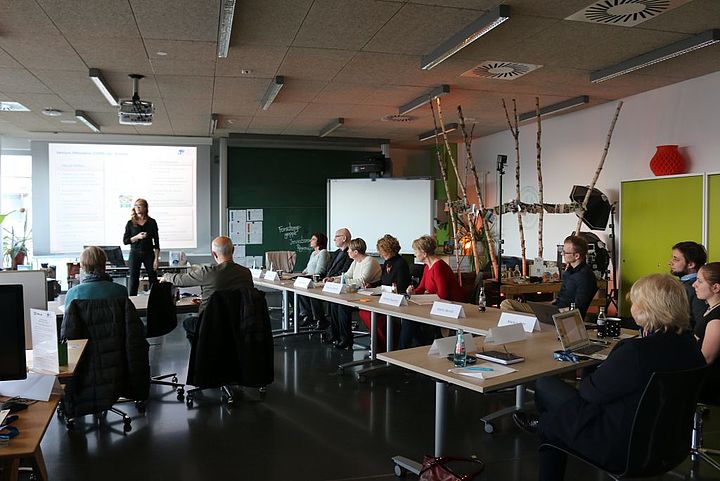
Technology transfer scouting involves the active search for, documentation, and evaluation of technologies with regard to commercialization options such as patenting, licensing, or starting new companies. The key players here are the technology transfer scouts. They will play a key role in the Innovation Hub. They raise awareness of technology transfer activities, identify research results, and assess their commercialization potential. In addition, they identify potential fields of application, users of the results, and other cooperation partners, as well as the needs of regional stakeholders.
The transfer scouts “bridge the gap” between the various actors in the innovation system, serve as intermediaries between science and commercialization, monitor trends and markets, and interact with institutions and hub actors. The transfer scout team will have an interdisciplinary focus, enabling the scouts to contribute diverse perspectives and experiences and to identify and leverage connections between research approaches and findings.
Innovation Labs | Experimental Labs
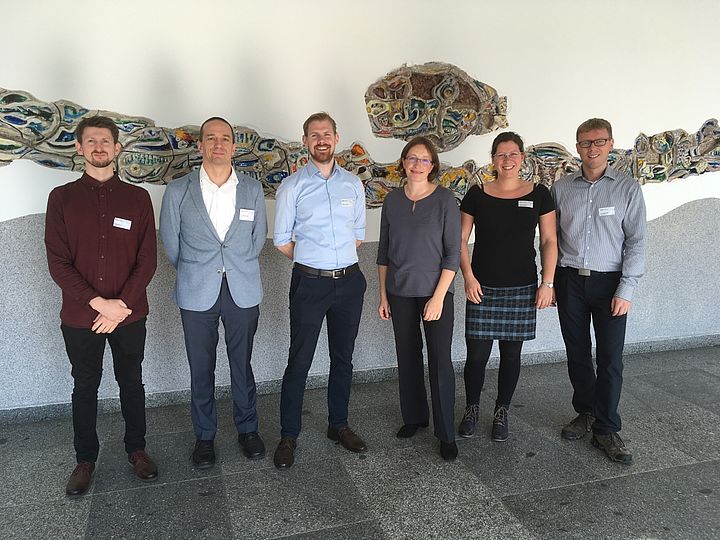
The Innovation Hub comprises various elements designed to initiate and develop innovation processes. One such element is the Innovation Labs, which bring together knowledge, technologies, infrastructure, and methods. This process begins with gaining an understanding of the problem and continues through problem definition, idea generation, solution development, and testing, all the way to joint implementation. The Innovation Labs are not so much structurally self-contained physical units as they are dedicated, interdisciplinary, flexible, and agile organizations that are open to all academic disciplines.
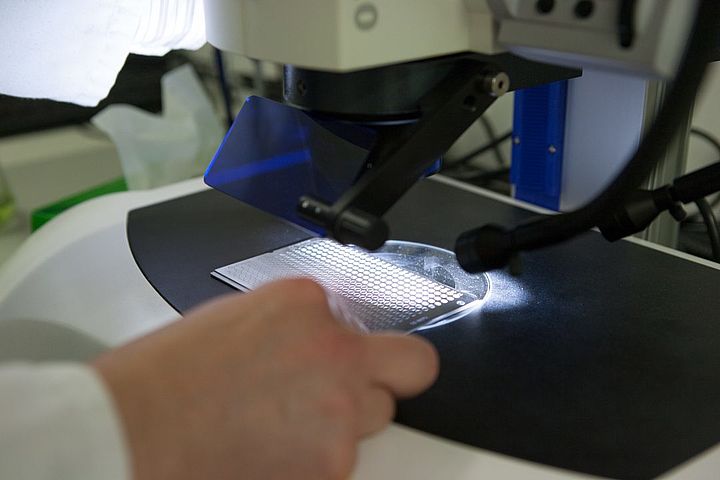
From an infrastructure perspective, the initiative will begin with the three themes “Digital Integration”, “Lightweight Construction”, and “Life Sciences”, as they are highly relevant to universities and also have significant demand potential in the region. However, the thematic areas and labs are neither strictly separated from one another, nor is their number exhaustive. “Digital Integration,” for example, will be viewed as an enabler for other areas—such as the transformation of the production system or the energy system—and will serve as the basis for establishing additional innovation labs.
Showrooms
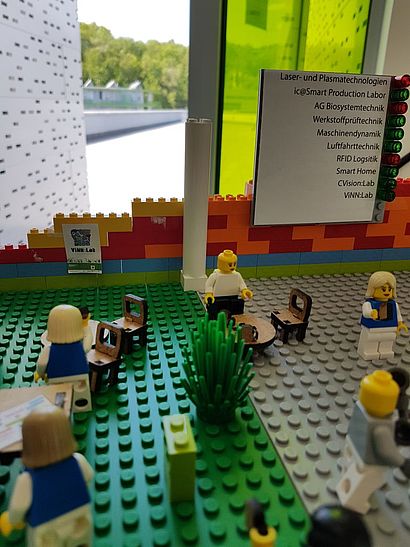
The two universities want to raise awareness of their capabilities and are planning to set up showrooms to that end. These will be established at both campuses. The first step is to develop a university-wide model that addresses the diverse characteristics of academic disciplines and the needs of the target groups (businesses and society).
More about the showroomsOpen areaClose area
The showrooms are not only exhibition spaces but also places for people to come together. Guided tours, workshops, and conferences facilitate the transfer of expertise to society. Co-working spaces will be established to collaboratively address technical and scientific issues.
In addition to the physical showrooms, they will also be virtualized. As a result, the Innovation Hub and the two universities will gain greater independence from their physical locations, and the physical showrooms will take on a virtual dimension.
Overall, the showrooms support the universities’ outreach to the general public. Universities become “open universities” that stakeholders and the broader community in the region can experience firsthand. This fosters close contact between all stakeholders in the regional innovation system and the local scientific community, as well as new forms of dialogue and interaction.
Testbed
Technological development in many fields is enormous. Information and communication technologies, in particular, are opening up many new opportunities for business and science. For small and medium-sized enterprises—which are characteristic of the region—this presents both opportunities and challenges. Investment costs, for example, are high, and success is by no means guaranteed for these companies.
As part of Innovation Hub 13, a test environment is therefore being developed for regional partners (businesses, academia, and civil society) to trial new technological approaches. This offers an opportunity for an accessible introduction to technological concepts (especially for civil society). Companies also have the opportunity to collaborate closely with researchers.
More about the testbedOpen areaClose area
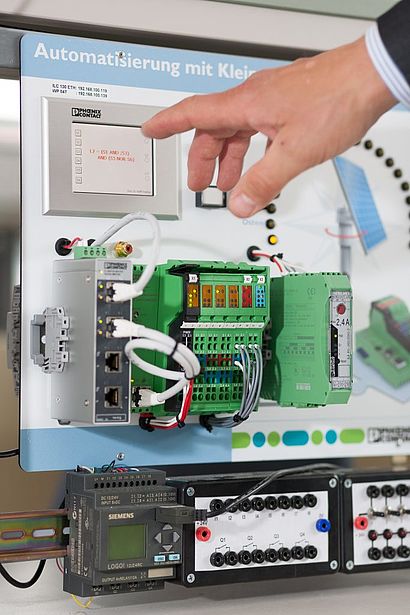
We offer consulting and solutions for specific technological challenges and provide support from the initial problem definition through to a tailored solution, as well as analyzing and identifying opportunities for improvement. This allows companies to test new solutions while keeping their costs low. By combining different technologies and disciplines, new approaches to innovation emerge. Plans call for the establishment of a virtual platform for exchanging data among the research partners, with access granted to industry partners, so that on-site testing at one of the universities is not always necessary.
The testbed activities strengthen and intensify the collaboration between the two universities and the partners in the regional innovation system. In this way, the universities become central testing partners in the region; this opens up new opportunities for research, teaching, and transfer for them and underscores their character as “open institutions.”
Regional Foresight
With the help of Innovation Hub 13, necessary transformation processes in the region are initiated and implemented with the involvement of all partners in the regional innovation system. Regional challenges serve as the starting point for innovation. However, this does not yet define specific measures or describe a desirable direction for regional development. For this reason, the innovative Regional Foresight approach is being applied to the region as a systematic, participatory strategy with a medium- to long-term perspective. Regional Foresight is based on the elements of anticipation, participation, networking, vision, and action, all tailored to the specific regional context.
Benchmarking will be conducted in the areas of ideas, knowledge, and technology transfer with the goal of identifying examples of best practices. Through future-oriented conferences and citizen panels, civil society will be systematically and purposefully engaged in dialogue on regional and science-specific topics.
The goal is to achieve a clear and shared understanding of the issues and to initiate collaborative solutions. A system is being developed to identify regional opportunities for innovation as well as cross-policy innovation policies.